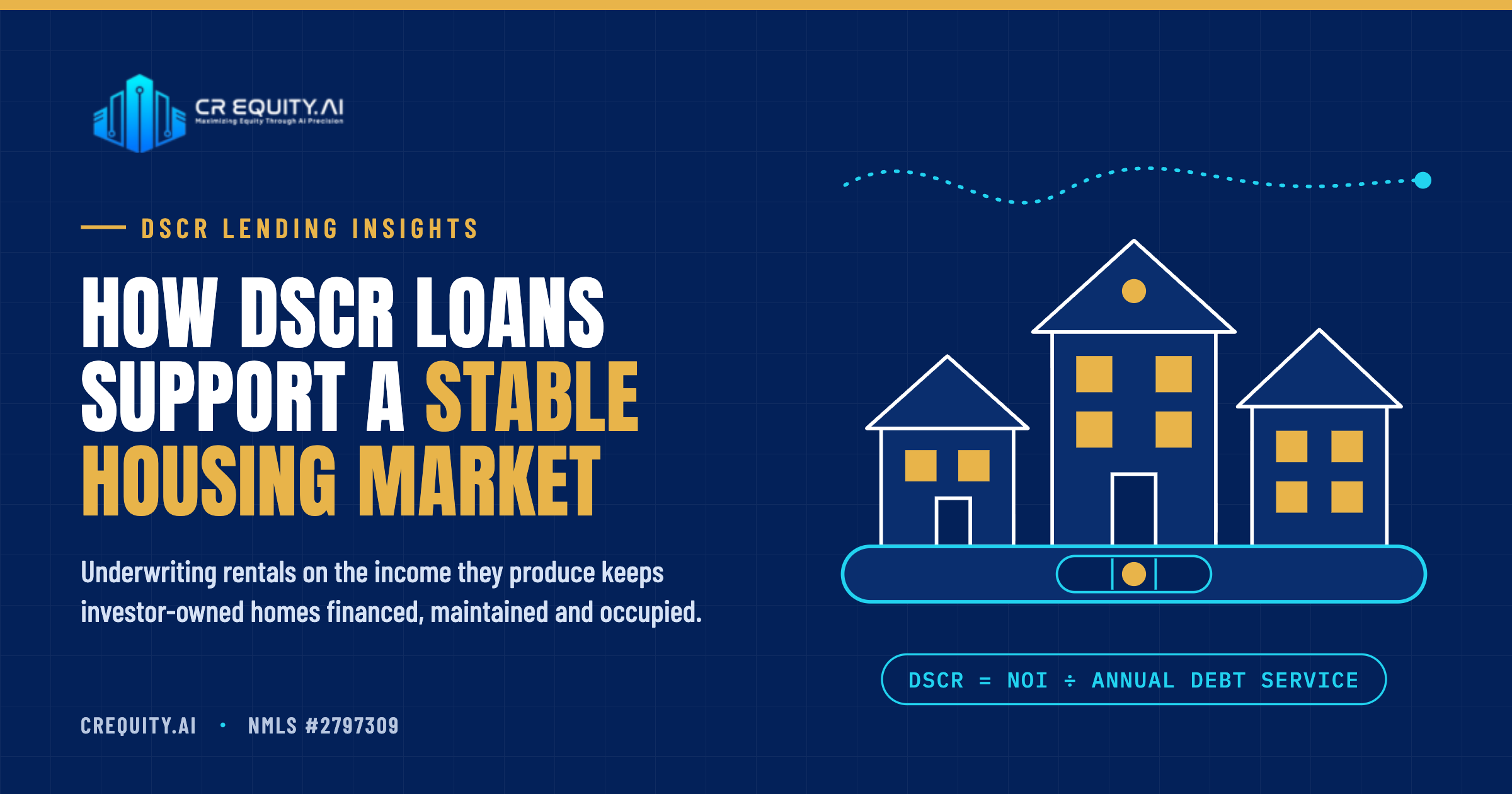
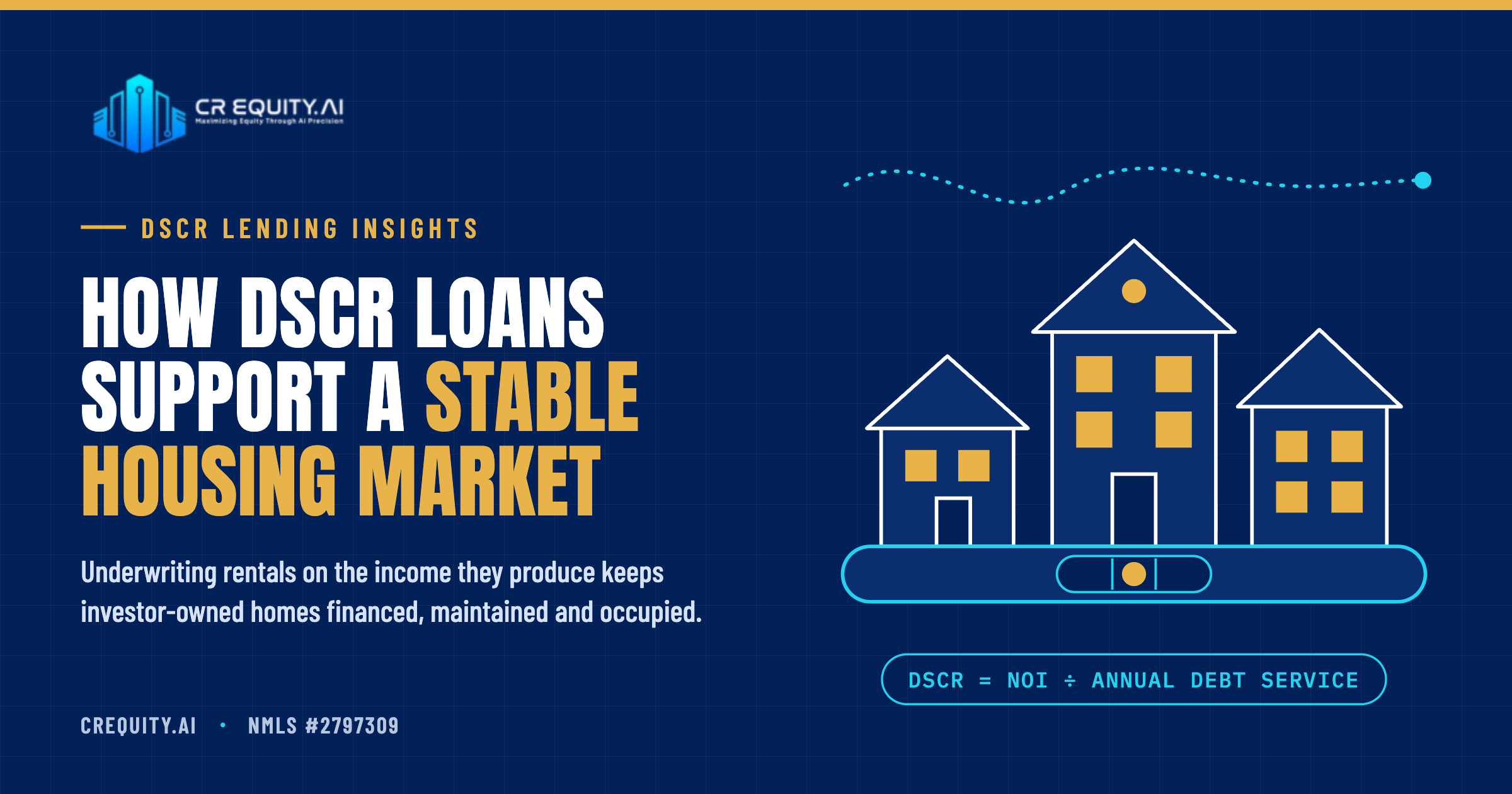
Learn how a DSCR loan can help investors secure rental properties, support consistent cash flow, and contribute to a more resilient real estate market
How DSCR Loans Can Stabilize the Real Estate Market
DSCR loans can give real estate investors a steadier way to finance rental properties when inflation, rising mortgage rates, and uncertain values make ordinary lending harder. As the fourth quarter arrives, many investors may see good opportunities but hesitate because the market feels less predictable. We believe financing tied to a property’s ability to produce income can help keep sound rental investments moving forward.
A DSCR loan is not the right fit for every borrower or every property. Still, when used responsibly, this type of asset-based financing can support investor liquidity, rental housing supply, and real estate activity when conventional loan rules tighten.
A More Resilient Path Through Market Volatility
Higher rates and changing property values can slow down buying, refinancing, and renovation plans. When investors pause, fewer homes may be improved or added to the rental market. That can leave renters with fewer choices and local real estate professionals with fewer active transactions.
Traditional financing often looks closely at personal income, debt-to-income ratios, tax returns, and employment records. Those standards may create hurdles for investors who are self-employed, own several properties, receive income through business entities, or use lawful tax strategies that lower reported taxable income.
With a DSCR loan, we can focus more closely on the income potential of the property itself. This can give qualified investors another route to finance a purchase, refinance existing debt, or improve a rental home without relying mainly on personal employment income.
DSCR Loans Put Property Cash Flow First
The debt service coverage ratio measures whether a rental property’s income can reasonably cover its debt obligations. In simple terms, we look at the relationship between rental income and costs such as principal, interest, taxes, insurance, and association fees when they apply.
That approach matters when inflation pushes up everyday ownership costs and higher rates make payments more challenging. A property may have steady tenant demand and dependable rent, even if its owner does not fit the usual conventional lending box.
When reviewing a DSCR loan, we may consider factors such as:
• The property’s expected or documented rental income
• Debt payments and regular property expenses
• The property’s condition and marketability
• The borrower’s credit profile, leverage, and available reserves
This structure does not mean underwriting becomes casual. It means the real estate asset plays a larger role in the financing decision. For investors with properties that show sufficient cash flow, that can create a clearer path to staying active when other financing channels become less available.
Flexible Financing Can Preserve Investor Liquidity
Rental properties need more than a down payment. Repairs, insurance changes, taxes, tenant turnover, closing costs, and surprise maintenance issues can all place pressure on an investor’s available cash. Keeping reserves accessible can help you respond without making rushed decisions.
Asset-based financing may help you preserve personal liquidity for the work that keeps a property safe, rentable, and competitive. Depending on the property type, loan terms, and lender guidelines, a DSCR loan may support eligible purchase or refinance opportunities. That can be helpful during the slower late-fall and winter transaction months, when patient investors may find opportunities that others pass over.
We also understand that real estate investors often have layered financial profiles. Income may come from rentals, partnerships, businesses, or investments, and fitting all of that into standard residential mortgage documents can be difficult. DSCR underwriting can reduce the emphasis on that paperwork while still requiring careful review of the investment.
A responsible review should include:
• Realistic rents rather than hopeful projections
• Appropriate loan-to-value levels
• Property condition and likely repair needs
• Cash reserves for vacancy and unexpected expenses
• A clear plan for managing the property over time
Rental Demand Can Keep Markets Moving
Even when higher mortgage rates discourage some people from buying a home, many households still need a place to live. Rental homes help meet that need, especially in areas where affordability and limited inventory remain concerns. Investors who can buy, repair, and hold quality rentals contribute to the supply of available housing.
Active rental properties also create movement beyond the investor. Purchases, renovations, refinances, and ongoing property operations can support agents, contractors, property managers, appraisers, title professionals, and local service providers. When well-run rental investments continue through uncertain periods, the effects can reach across a community.
Well-structured financing may also help you avoid a forced sale during a temporary market dip. If a property has enough income to support its obligations, you may have more room to hold it while values adjust. That flexibility can be stabilizing, but it depends on honest planning.
Before depending on projected rental income, we recommend accounting for vacancy, repairs, property management, insurance increases, taxes, and possible changes in rent. A strong property plan leaves room for real life, not just the best-case scenario.
Responsible DSCR Lending Reduces Unnecessary Risk
DSCR loans can support stability only when both the lender and investor stay disciplined. We believe the strongest loan structures are built on verified market rents, realistic operating expenses, adequate reserves, appropriate leverage, and a clear understanding of the property’s condition.
Overly optimistic rent estimates can turn a workable deal into a stressful one. Before moving forward, you should review comparable rents, local vacancy patterns, lease quality, neighborhood demand, and any upcoming capital work. A roof, heating system, or major repair need can quickly change a property’s cash flow.
Long-term rental investing is different from short-term speculation. The properties most likely to hold up through market swings usually have durable rental demand, manageable expenses, and a practical operating plan. A DSCR loan should be one part of that plan, alongside a careful review of rate structure, prepayment provisions, reserve requirements, and possible exit options.
Build for the Next Market Cycle
When conventional financing becomes harder to obtain, DSCR loans can help qualified investors remain active by focusing on rental income and the strength of the underlying property. That can support purchases, refinances, property improvements, and the continued availability of rental housing during periods of inflation, rate pressure, and market uncertainty.
Before taking on financing, look closely at whether the property’s cash flow can carry the full weight of ownership through changing conditions. A conservative plan, realistic assumptions, and enough reserves can help you hold a stronger portfolio through the current market cycle and prepare for the next one.
Refinance With More Cash Flow Flexibility
At CR Equity Ai inc, we help investors assess refinancing options that align with their property income and long-term goals. Learn how a DSCR loan may support a more flexible approach to qualifying for your next refinance. For personalized guidance, contact us to discuss your investment property financing needs