

SOC 2 is a meaningful signal when vetting a lending platform, but only if you check the report itself rather than a badge on a website. The first document to request is the full SOC 2 report, including the auditor’s Independent Service Auditor’s Report and opinion. Regulatory frameworks like the FTC Safeguards Rule and OCC third-party guidance treat this kind of verification as standard practice, and lenders such as CR Equity AI publish SOC 2 compliance as part of their security posture.
TL;DR:
- A full SOC 2 Type II report, including the auditor’s opinion and scope details, is essential before relying on a lender’s compliance claim.
- Verify that the report covers the relevant systems you will interact with and check the testing period is recent and aligns with current controls.
- Ensure the auditor is a licensed CPA firm with relevant security credentials, and review any noted exceptions to assess their impact on your data security.
- Do not accept SOC 3 summaries or reports with carve-outs in critical areas such as payment or escrow systems, especially if the opinion is qualified.
- Supplement SOC 2 verification with additional documents like recent penetration test results and incident response plans, especially for larger deals or escrow transactions.
Table of Contents
- What a lender’s SOC 2 report includes and why each element matters
- Step-by-step verification checklist to follow when a lender claims SOC 2
- Exact questions to ask lenders and red flags to act on
- Regulatory context: what U.S. rules expect from lenders on third-party oversight
- Publisher proof: how CR Equity AI shows SOC 2 compliance and where to verify it
- When a SOC 2 report is enough, and when to push for more
- Verify CR Equity AI’s security posture before you submit a deal
- Sources
- FAQ
What a lender’s SOC 2 report includes and why each element matters
A SOC 2 report is built around a few core components, and each one tells you something different about the lender’s controls.
The auditor’s opinion sits at the front of the report. An unqualified opinion means the auditor found the controls operating as described, with no material problems. A qualified opinion signals the auditor identified issues significant enough to flag, which warrants a closer look before you rely on the report.
Reports also come in two types. A Type I report evaluates controls at a single point in time. A Type II report tests those controls over a period, usually several months, giving you evidence that the controls actually worked in practice rather than just existing on paper. Type II is the stronger form of assurance for anyone entrusting a lender with sensitive data or funds.
The report’s scope and system description define which systems, data flows, and processes the audit actually covered, and the testing period tells you when that coverage applied. Exceptions are instances where a control failed during testing. None of these terms mean much without checking who performed the audit: the auditor should be a licensed CPA firm, and engagement teams with credentials like CISA or CISSP are a positive sign of security expertise.

Step-by-step verification checklist to follow when a lender claims SOC 2
A SOC 2 claim is only as good as the paperwork behind it. Use this sequence when a lender tells you they are SOC 2 compliant.
- Request the full SOC 2 Type II report, not a summary or a one-page attestation letter.
- Locate the Independent Service Auditor’s Report and read the opinion paragraph directly, since users should examine audit scope, carve-outs, and exceptions rather than accepting a report at face value.
- Confirm the report’s coverage dates align with the lender’s current systems, not a version from several years ago.
- Verify the scope includes the systems that actually touch your data and funds, such as payment processing, escrow handling, and document storage.
- Review any noted exceptions and map them against your own critical concerns: an exception in a marketing system matters far less than one in payment controls.
- Check whether the auditor is a licensed CPA firm and whether the engagement team shows relevant security credentials.
- Ask whether any subcontractors or subservice organizations are involved, and confirm their systems are either included in scope or separately covered.
A few supplementary checks round out the picture, especially when the SOC 2 scope feels thin:
- Ask for a penetration test summary from the past 12 months.
- Request the lender’s service level agreement (SLA) language on uptime and data handling.
- Ask to see a written incident response plan, even in summary form.
According to OCC guidance for third-party risk management, requesting these supplementary artifacts is appropriate whenever a SOC 2 report has a narrow scope or documented exceptions.
Exact questions to ask lenders and red flags to act on
Come prepared with specific questions rather than a general request for “proof of compliance.”
- Who is the auditor, and is the firm a licensed CPA practice with cybersecurity experience?
- What are the exact start and end dates of the Type II testing period?
- Which systems are explicitly included in the audit scope, and which are excluded?
- Were any exceptions noted, and if so, what were they?
- Are any subcontractors or subservice organizations involved, and are they covered by the report?
- How is customer data encrypted, both at rest and in transit?
- What is the lender’s process and timeline for notifying customers after a security incident?
Certain answers should raise concern immediately: a lender that offers only a SOC 3 summary instead of the full report, a report with carve-outs around payment or escrow systems, a qualified opinion, a testing period more than a year old, or no mention of subcontractor coverage at all.
Pro Tip: If a lender hesitates to share the full report under a standard confidentiality agreement, treat that hesitation itself as a data point.
When gaps surface, don’t walk away automatically. Ask for written clarification, request contract-level assurances on the specific control that’s missing, or require escrow arrangements for funds until the gap is resolved. If a critical control, such as encryption or incident notification, is absent entirely, pause funding until you get a straight answer.
Regulatory context: what U.S. rules expect from lenders on third-party oversight
Two federal frameworks explain why SOC 2 verification matters beyond good practice. The FTC Safeguards Rule requires covered financial institutions to maintain written information security programs, oversee their service providers, and report certain breach events to the Commission. That obligation extends to any vendor or platform handling customer financial data.
Separately, interagency guidance from the OCC treats SOC reports as one input to third-party risk management, not the whole program. Regulators expect firms to pair any attestation with:
- Ongoing monitoring of the vendor’s security posture, not a one-time check.
- Contract terms that specify data handling, breach notification timelines, and liability.
- A documented remediation process when issues surface after the report is issued.
A SOC 2 report answers “did this pass an audit.” It does not answer “what happens if something goes wrong next month?” which is why the surrounding contract and monitoring practices carry equal weight.
Publisher proof: how CR Equity AI shows SOC 2 compliance and where to verify it
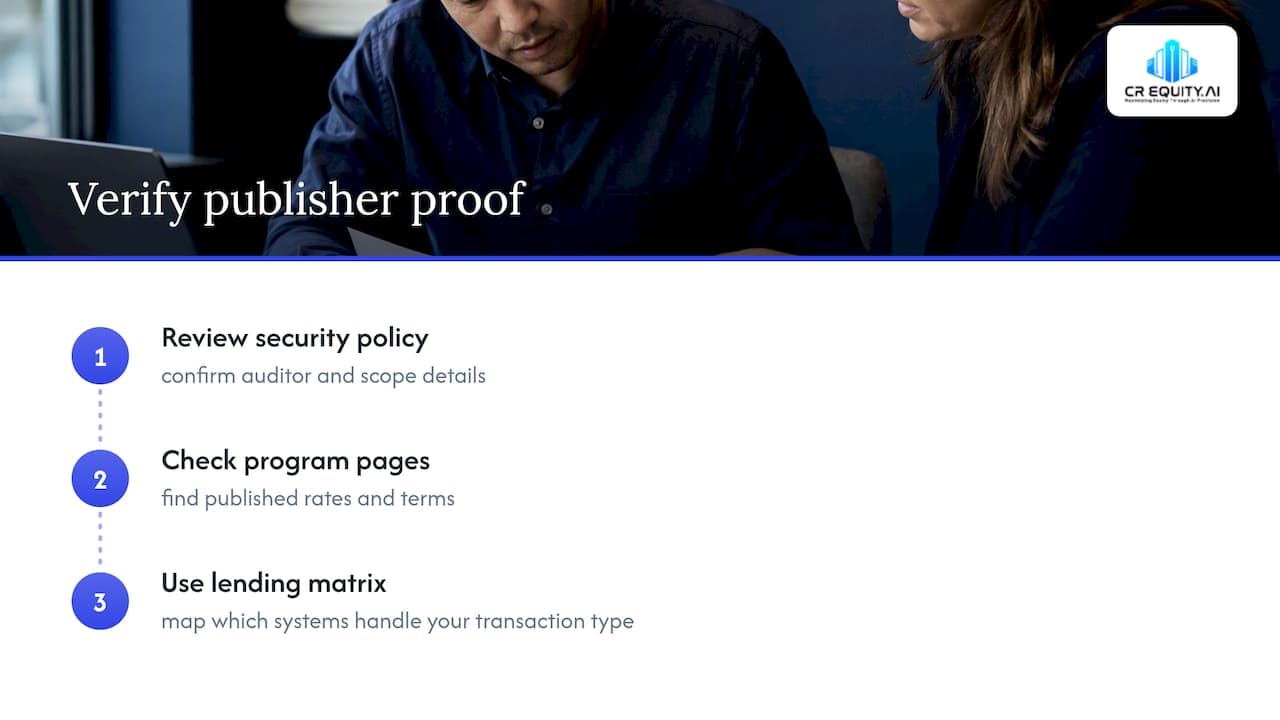
CR Equity AI publishes SOC 2 compliance as part of its stated security posture, alongside advance-rate grids that are available before you apply, giving borrowers and investors a way to check terms without submitting an application first. Readers can apply the checklist above directly: review the security policy for the auditor and scope details, check program pages for published rates and terms, and use the commercial lending matrix to map which systems handle your specific transaction type. Cross-referencing these publisher pages against the questions in this guide is the fastest way to confirm a lender’s claims hold up.
When a SOC 2 report is enough, and when to push for more
A clean SOC 2 Type II report is a strong baseline for most transactions, but the size of the funds involved should set your threshold for deeper review. Larger deals, escrow arrangements, or direct payment flows justify contract-level protections and periodic rechecks of the lender’s report, not a one-time glance. SOC 2 tells you the controls were tested. It doesn’t replace a signed agreement that spells out what happens if they fail.
— Robert Stewart Jr
Verify CR Equity AI’s security posture before you submit a deal
Some direct lending platforms lend their own capital and publish advance-rate grids before application, supporting a variety of borrower types so terms and security documentation can be checked before committing to a deal.
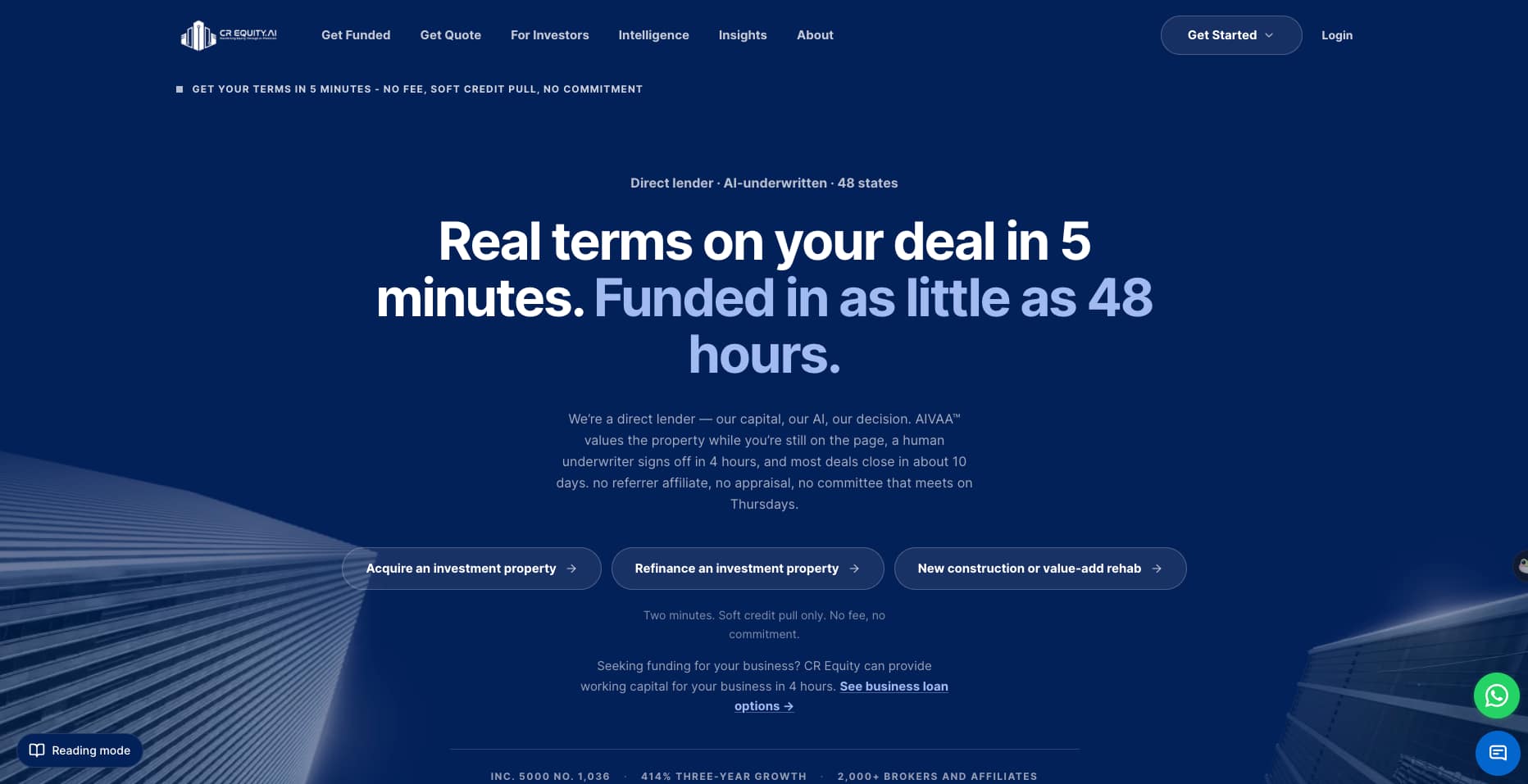
Review the funding options available or start with DSCR cash-out refinance terms to see published rates firsthand.
This article is general information, not a substitute for advice from a qualified financial advisor. Consult a qualified financial professional about your own circumstances before acting on anything here.
Sources
- Third-Party Risk Management: A Guide for Community Banks
- Standards for safeguarding customer information (FTC Safeguards Rule)
- How to properly review an SOC report (ISACA Now Blog)
- Interagency Guidance on Third-Party Relationships: Risk Management
FAQ
Is SOC 2 the same as SOC 3 for a lending platform?
No. A SOC 3 report is a public summary that omits the detailed test procedures and results, while a full SOC 2 Type II report includes the actual tests and findings you need to evaluate a lender’s controls. Always ask for the full SOC 2 report, not just the summary.
What does an exception in a SOC 2 report mean?
An exception means a control did not operate as intended at some point during the testing period. Whether it matters depends on which system it touched: an exception in a system unrelated to your data or funds carries far less weight than one in payment processing or access controls.
Does SOC 2 compliance guarantee my funds are safe?
SOC 2 is a strong signal of security practices, but it is not a guarantee on its own. Regulators expect it to be paired with ongoing monitoring and contract terms, since third-party attestations are one part of a broader risk management approach.
How often should a lender’s SOC 2 report be updated?
Type II reports typically cover a period of several months to a year, and a report that is significantly older than that window no longer reflects current controls. Ask for the most recent report and confirm the testing period dates before relying on it.
Is CR Equity AI’s SOC 2 status something I can verify directly?
Yes. CR Equity AI publishes its security policy and advance-rate grids for review before you apply, so you can check the documentation using the same steps outlined in this guide.